Vote and rate on Jamie Clubb's Work by clicking on the following links. Thank you!

Wednesday, 19 August 2009

The Bounce: Revisited in The Kingpole

Circus lion tamer, lithograph by Gibson & Co.,...Image via Wikipedia

Recently you may have noticed I have published a series of articles/posts on the Bouncer Wagon or Bouncing Lions act. This exciting act existed for only a brief time in circus history and occurred when the caged arena acts were eclipsing all acts presented in beastwagons. Since my articles on here I approached the Kingpole Circus Friends magazine with the idea of writing a comprehensive article on the subject. It was at this stage that my father brought out an edition of this magazine published in 1976 and written by a famous lion bouncer, Eddie Campbell, entitled "The Bounce". Eddie's piece added more information to the history of this act and I was able to compile a far more detailed work.

The September edition of the Kingpole magazine - the official magazine for the Circus Friends Association - is out shortly.

Reblog this post [with Zemanta]

Tuesday, 7 July 2009

Forgotten Fame III: Captain Herbert Clarke

Thanks to cousin, Jim Stockley, I have been able to read yet more "forgotten fame". Anyone who has read my blog for a decent period of time will know I am a particular fan of this stuff. This is why I enjoy reading work from historians like Heather Vallance and Cathy Barrett (who seek out hard to find primary source material in order to reconstruct periods from the past. It is also why I actively ferret out and oppose pseudohistory, alternative history and crackpot conspiracy theories (see my blog www.beelzebubsbroker.blogspot.com for more on this). There is more than enough fascinating data and lost information that can be uncovered through legitimate research.

My book "The Legend of Salt and Sauce" focuses on two elephants and their trainers that became legendary almost mythical in the circus world, a community I grew up in, but were virtually forgotten by the outside world. It made me consider other examples of even more famous events and people who also became stuck in time. This was my first post on the subject http://jamieclubb.blogspot.com/2009/03/forgotten-fame-salt-and-sauce-meet.html

Prompted by a response from cousin Jim again, I posted a piece on one of his favourite examples of forgotten fame http://jamieclubb.blogspot.com/2009/04/forgotten-fame-ii-incredible-abernathy.html

Now Jim has found an excellent blog that details a piece of history seemingly forgotten by our own community, the life and times of "Captain" Herbert Clarke. Clarke is a character not found in any of the circus encyclopaedias or anywhere else on the net, which is what prompted the author of the historical blog to write about him. What is even more amazing is that my father is an avid researcher into the history of Bostock and Wombwelle's Menagerie, the very show that booked Clarke, and this was the first time he had heard about the trainer. It just goes to show how easily the past can be forgotten even within the microcosm of the circus. Enjoy! http://www.thebloxidgetallygraph.com/patcollinsliontamer.htm

Reblog this post [with Zemanta]

Thursday, 25 June 2009

My First Forward!


Back in February Geoff Thompson contacted me to ask whether I would write the forward to his latest collection of essays. My workload this is the most it has ever been, but I jumped at the opportunity. Geoff is a dear friend of mine and was a huge inspiration to me 11 years before we even met. Since that meeting he has always been there as a friend and I have watched how both our careers have prospered. I don't say this lightly when I state that it was a major honour for me to be considered for the job of writing his forward.
'This is your life. If you leave it to others they will feed, force or coerce you into living their reality. And where's the fun in that?'. In this third volume of life lessons and modern-day musings, Geoff Thompson gives the reader that extra nudge to follow their own path and find the turning point to realising their full potential and reaching their goals.
This is the third book in the series that brings together the inspiring and thought provoking articles that were featured on this web site and many were discussed in the podcasts.


Reblog this post [with Zemanta]

Monday, 22 June 2009

George Lockhart's First Elephants


These contemporary Victorian illustrations were used to promote George William Lockhart's first elephant act, Boney, Molly and Waddy. Boney's "coat" is clearly labelled. Boney was remarkable for a variety of reasons. She was the first elephant that George bought and according to George Lockhart Jnr she originally stayed with the elephant trainer and his wife like a household pet! Boney was also much smaller than her two companion elephants, Waddy and Molly. Some writers, such as the Lockhart relation, James Pinder, have suggested that she was under nourished due to George Lockhart's limited knowledge at the time, but later research in my book "The Legend of Salt and Sauce" suggests another possible theory. Boney might have been a pygmy elephant. Her name is actually taken from her country of origin, Borneo, where the pygmy elephant originates. James Pinder says that she was known as Boney because of this supposed under nourishment. Actually Boney was pronounced "Bonny" according to contemporary newspaper reports.

Boney was the most skilled the three elephants and there are records of her performing alone as well as with the rest of the group. In fact, there is so much written information on this group of ele[hants during their time with George William Lockhart that I felt the story warranted two chapters, as it helped explain a few things regarding George's tragic career with his next group of elephants, The Cruet, especially their most famous members, Salt and Sauce.

Despite the large amount of written material on Boney, Molly and Waddy, there were no reproducible illustrations or photographs at the time "The Legend of Salt and Sauce" went to print. Therefore, I am very grateful to John Morris for sending these in today, so I can reproduce them here.

Reblog this post [with Zemanta]

Friday, 22 May 2009

Dick Chipperfield Jnr – The Last Man to Work the Bouncing Lions?

This is another post dictated by my father on the subject of the Bouncing Lions. This time it features my uncle, Dicki Chipperfield both when he first presented the act, at only age 15, and when he last presented it, when Chipperfield's Circus famously toured South Africa. - Jamie Clubb


The first picture shows Dick “Dicki” Chipperfield Jnr in 1958 presenting three lionesses in the wagon cage. Dicki would have only been barely 15 years old. This was for a television show. He was stopped working by the authorities after this performance. His uncle, John Chipperfield, took the act over. Dick Snr told me they took one lioness out because the act was too slow. This shows a similar pyramid to Tommy Kayes’ act. You will notice this was in the real wagon with the correct measurements – 16’ long x 6’6” wide x 6’6” tall. The height varied from trainer to trainer, some preferred 7’ tall inside. These measurements were crucial for the “bounce” to be achieved correctly. That is the measurements of the length and the width. The height didn’t matter and, in fact, as in the case with Tommy Kayes’ this was an advantage and made a better show. These three animals didn’t bounce very much, in fact, hardly at all. When John Chipperfield took over and later Terry Duggan they really went up the side of the cage.

The second picture shows Dicki in South Africa in 1965 with a very simply built cage. These lions really did bounce up the side and in the same fashion as Kayes and Dicki’s father, Dick Chipperfield Snr. Unfortunately I have no photographs of Dicki’s father in his early days working the bouncing act, only entering the cage with “Old Vic”, Tommy Purchase’s lioness. I have one of him when he originally trained the act for his son, but it only shows the two lionesses sat in the corner and Dicki’s father knelt down. I will post it when I find it. - Jim Clubb

Reblog this post [with Zemanta]

Captain Tommy Kayes - Master of the Bouncing Lions

Due to popular demand, not to mention a bit of controversy, my father and I have decided to continue on the subject of the bouncer wagon (AKA "The Bouncing Lions"). My father has dictated the below post on "Captain" Tommy Kayes, the man considered by many to be the "Master of the Bouncing Lions". Although the pictures do not show Kayes in a wagon, the act is fundamentally the same with the caged arena being built to the same dimensions as the wagon. The point of this post is to define what is meant by the "Bouncer Wagon Act"; what makes it different from the conventional wagon act, sometimes referred to as a "Posing Act", and what makes it different the conventional cage act. - Jamie Clubb


The picture immediatley above my post was taken at Blackpool Tower Circus circ. 1940. When Tommy stopped working on the fairgrounds with the wagon cage he adapted a ring cage for his presentation. The dimensions were the same except for the height, which was a good 5’ higher than the beastwagon. This allowed him to bounce the lions high up, as seen in this photo. The first photo shows the opening trick with the pyramid on the slings attached to the bars of the cage. As soon as this was completed, the assistant would knock the slings on the floor from the outside. Tommy would pick one up and then use it instead of a chair for the rest of the act. It also shows him performing the “Head in the Mouth” with the male lion. This was rarely done in the performance, as he said it slowed the routine down. Much play was done before he entered the cage. The big lioness, Jubilee, would stand up at the door with her paws through the bars not letting him in. She would be then sent to the other end of the cage and an assistant would put a pole through to feign keeping her there, and allow Tommy to “slip in”. The fun would then start.

The two lionesses and the lion would make the pyramid instantaneously and then fly off. The two lionesses going up the wall of the cage and the male lion would stand in the position shown in the second photo. This would then be repeated at the other end of the cage. Finally the two lionesses would race round the top of the cage like the “wall of death” and the lion would circle the floor. Tommy would make his exit and Jubilee would stand at the door, defiantly roaring. In some performance they would announce that he couldn’t get in the cage and that it was too dangerous. The lions would be sent out and another one or two acts would work until Tommy came back in again. They’d let the lions in and this time he would “succeed in getting in”. He would finish by firing his blank cartridge revolver in the air, as the lions charged around. They worked automatically with virtually no effort from the trainer. He worked them with just the sling in his hand or a short stick, but sometimes with nothing at all.

Tommy Kayes died of pneumonia after catching a chill after his act. I am not sure of the exact date without checking, but it was in the mid ‘40s. - Jim Clubb


Reblog this post [with Zemanta]

Friday, 15 May 2009

The Bouncer Wagon: A Uniquely English Invention?

Towards the end of the 19th century European circus saw the gradual decline of wild animal acts being presented inside "beastwagons" (mobile caged containers, now used on circuses just as sleeping quarters) in favour of the new caged arena style acts. However, there would be one last hurrah for these types of act, an invention that came out of the early part of the 20th century, known as the “bouncer wagon act” (aka the “bouncing lions”). Above there is a picture of a beastwagon that would eventually be used for this purpose. The act pictured is the sometimes confused “Posing Act” which is the original type of trained wild animal act presented in the beastwagons. My grandfather, Dick Chipperfield Snr., stands on the outside whilst Carol Caldwell presents the act inside. The act was presented on Chipperfield’s Christmas Circus in Bingley Hall circ.1961/62 and was televised and shown on Christmas Day.

Prior to the posing acts, animal “trainers” of the 19th century wore armour and virtually fought with the wild animals. In many respects the bouncer wagon harked back to these days albeit in a far safer and more humane fashion. The bouncer wagon act was a highly trained and energetic routine, where lionesses raced around, up the sides and even on the ceiling of the wagon.

My grandfather saw perhaps the first ever bouncer act. He also rescued his brother's father-in-law, Tommy Purchase, from a savage attack by a lion in a wagon just like this one. This was not a bouncer wagon act; it consisted of two male lions that posed while Rosie, Purchase’s daughter, danced between them. After this presentation the bouncing act was done with a single lioness called “Old Vic” who worked in just a quarter of the wagon. The rescue made front page news at the time. Sadly Purchase, an amputee, who presented the act with a wooden leg, died soon after from a gangrenous infection caused by the wounds sustained in the attack.

Our sources indicate and it was the opinion of journalist, circus historian and amateur wild animal trainer, Eddie Campbell, that the bouncer wagon act was a uniquely English invention of the early 20th century. There does not seem to be any evidence of the act existing prior to "Captain" Tommy Purchase. My father, also a circus historian and a well-respected wild animal trainer, said "I am sure he was the first, although Tommy Day could have pipped him to the post". He then added "Apart from Eddie, the Chipperfields (Dick Chipperfield Snr, Dick Chipperfield Jnr, John Chipperfield and Terry Duggan), Tommy Day and Tommy Kayes nobody else did it. All the acts from ‘Bostock and Wombwelle’s’, ‘Biddel’s’, ‘Sedgwick’s’, ‘Mander’s’, ‘Anderton and Roland’s’ only did posing acts with a few tricks, no running up the walls, which defines the true bounce. “Captain” Tommy Kayes was undoubtedly the best, with one lion and two lionesses. I have seen some footage of him and it was absolutely fantastic." Kayes also had a caged arena set up to the same dimensions as a beastwagon to perform the bouncing routine. Pathe News has footage of it on their archive site under "Manchester Can Take It", where it is featured at Belle Vue.

Dad also spoke to Tommy Day's son who told him about his father's act:

"[it] concluded with him jumping out of the wagon and leaving the door open. The lioness then stood and roared at the audience out of the open door. I actually achieved this as well when I attempted to train the act, but had a few mishaps, so best left it out".

Family politics prevented my father from presenting the bouncer wagon act. My uncle Dicki (Dick Chipperfield Jnr.), presented the act when he was just 15 and was actually televised doing it. There are some who say that he did when he was 14! Chipperfield's were forced by the authorities to terminate his performance on the basis of his age. John Chipperfield, Dicki’s uncle, took over the act before it was passed onto Terry Duggan. Clem Merk, one of the “house” animal trainers, also attempted to work the act, but despite his impressive background presenting fast-paced lion acts he did not adapt to the bouncer style. He was knocked down a few times in rehearsal and he never worked the act in front of an audience. It would appear that the bouncer wagon act was an art all of its own. Dicki would work it again in 1964 and then when his family’s circus toured South Africa, 1964-67. After this, however, there are no records of anyone else working the bouncer wagon act again.

Postscript: In 1972 Dicki and my father attempted to resurrect the bouncer wagon act an American TV show. Work even began on building the wagon, but it was left unfinished when the contract fell through for financial reasons. In 1987 Ringling Brothers Barnum Bailey Circus asked my father to resurrect the bouncer wagon act again for their 1988 season as a prelude to his 14 lions in the caged arena, presented by Larry Alan Dean. The wagon was to be pulled around the track by an elephant. Dean would perform the act and then go straight into his caged arena performance. However, it was deemed impractical and the act was substituted for a single lion posing with his paws on the pedestal. Sonia Allen, “The Lady of the Lions”, presented the last of the fairground lion shows. These were posing acts in a beastwagon. The act was eventually sold to Sanger’s Circus in 1955.


Reblog this post [with Zemanta]

Tuesday, 12 May 2009

Sam Lockhart as "Big Dick"?

Is this picture taken from the 1889 performance Sam Lockhart gave in front of Queen Victoria with his "Royal Elephants" Jock and Jenny? My father seems to think so. This real illustration has been reproduced, as the trend has been for some time now, and captioned with a cheeky joke.

The trainer riding the elephant is not depicted in the usual way contemporary newspaper artists drew Sam Lockhart. Photos and illustrations I have seen of Sam and his brother George, who is a main character in my book "The Legend of Salt and Sauce", show them with classic thick but neat moustaches. The character riding the "One Eyed Jumbo" clearly has a beard. I have no evidence either to suggest that Sam rode any of his elephants. However, there are plenty of examples given in my book of artists of the period and decades afterwards of artists straying way off the mark in their depiction of characters and incidents.

So who are the characters in the picture? Who was the elephant, the trainer and the spectators? Is that a rather youthful depiction of Queen Victoria, Prince Edward (to be Edward VII), Princess Alexandra et al? We know that the Victorian and later Edwardian family were all regular visitors to the circus who saw many of George and Sam's performances.

Reblog this post [with Zemanta]

Friday, 8 May 2009

Update on the Strait Bargate Boston Photograph

My last post on here featured a photograph with "Prince" Abdul Karim with Salt and Sauce in Strait, Bargate, Boston, UK taken around 1950 when they all were working on Ringland's Circus. Also pictured was one of Karim's children. I have seince made contact with Farouk Karim again and asked him the identity of the little boy featured. He confirmed this little boy was his elder brother, Hussain. My gratitude to the Karims and their continued support of "The Legend of Salt and Sauce".

There will be more on Abdul Karim shortly, as my father has recently come into possession of a programme featuring Karim under another stage name of his, "Bey".
Reblog this post [with Zemanta]

Tuesday, 28 April 2009

Salt and Sauce in Strait Bargate, Boston circ. 1950

Recently Ray Dolling, a very helpful circus historian and supporter of my book "The Legend of Salt and Sauce", sent me this photocopy of a picture taken around 1950. It was a photograph owned by a friend of his who is featured in the picture. He is the little boy you can just see looking out of the window with his mouther above Hepworths. It is a classical example of the old circus parades once common in the UK, but banned since the 1970s due to the Dangerous Wild Animal Licence 1976 and Health and Safety legislation. Standing in the foreground is the bounding rope performer and sometime presenter of Salt and Sauce, "Prince" Abdul Karim with one of his sons. I hope to have this son's identity shortly. At the time Karim and the elephants were touring with Ringland's Circus owned by "Long" Tom Fossett and later by his son, Dennis, who also worked Salt and Sauce.

Karim's life was dramatically changed along with the rest of his family when Salt died in Canterbury 1952. Fired from his job on Ringland's Circus Karim settled in Canterbury, where the family retained a local celebrity status for decades.

Actually now that I look at the photo I see I have reversed it! Ah well, according to the general consensus on genertions I just missed "The Net Generation" by one year. That's my excuse and I am sticking to it.


Reblog this post [with Zemanta]

Tuesday, 21 April 2009

Forgotten Fame II: The Incredible Abernathy Brothers


Following on from my cousin, Jim Stockley's interesting post regarding the amazing story of the Abernathy brothers, I felt that it is worth giving this piece of history its own post. The Abernathy boys became famous for a short time when they travelled from Oklahoma to New Mexico and back again on horseback to welcome President Theodore "Teddy" Roosevelt back from him European visit. As my cousin pointed out, it might be the case that their 62 trans-American record has not been beaten. However, what makes the story even more incredible is the fact that Bud Abernathy was only nine and his younger brother, Temple, was only five. This was a very different age. It was an actual event in the mould of Mark Twain's most famous creations, Huckleberry Finn and Tom Sawyer (whose adventures I joyfully downloaded onto my ipod this year!)
From "The Weekly Wire":
"Bud was 9 and Temple only 5, the two boys set out with their father's blessing
to ride horseback from Frederick, Oklahoma, to Santa Fe, New Mexico, and
back again...alone. They went not out of necessity, nor on some desperate
errand; they went for the fun of the adventure. It was 1909. In the next
four years, they would undertake even more prodigious travels through
America, becoming minor celebrities, securing corporate endorsements and
meeting President Taft in the White House."

For the full article, please click below:


Reblog this post [with Zemanta]

Tuesday, 14 April 2009

Salt and Sauce at Bingley Hall 1932/33


George Pinder has very kindly sent over two scans of a Christmas programme for Bingley Hall's circus 1932-1933. The programme shows listings of the elephants Salt and Sauce. At the time the elephants were owned by John "Broncho Bill" Swallow. He had auctioned off his own circus in 1930 in the wake of the Great Depression. Salt and Sauce had been one of the few items that had not been sold*. They ended up becoming a big part of the business that would sustain him for 15 years before his death in 1945.
Notes:
George Pinder's famous French/English circus family feature a lot in my first book, "The Legend of Salt and Sauce". The Bingley Hall booking is also noted in my timeline appendix.

Bingley Hall has special childhood memories for me, as my parents ran their circus there for the Christmas season of 1982/1983 and 1983/1984. Sadly 1984 would be the year that the building caught fire, damaging it beyond repair. It was owned by the famous yachtsman, T0ny Bullimore, at the time my parents worked there and for years afterwards we still received Christmas cards from him. Bingley Hall replaced Bingley House in 1850.

Bingley House 1830, demolished to build Bingle...Image via Wikipedia


*Actually there is more to this story than meets the eye as my book reveals.

Reblog this post [with Zemanta]

Tuesday, 24 March 2009

Beelzebub's Broker!

I am proud to announce my new blog, "Beelzebub's Broker". The point of this new blog is to showcase more experimental and controversial work. I am happy to also promote and recommend work that I feel is in line with my objectives. Writing will be shaped by, but certainly not limited to individualism and scepticism.
Reblog this post [with Zemanta]

Tuesday, 17 March 2009

Open Mind (versus empty head!)

"Open Mind (versus empty head!)" is the last of my tenet series of articles. It addresses the need to be able to change and be flexible both in the short and long term. It's main focus is on the martial arts and self protection, however, it is also touches upon various other aspects of life and I thought would be appropriate for this blog.

http://www.clubbchimera.com/?p=568
Reblog this post [with Zemanta]

Thursday, 12 March 2009

Recently I was prompted to post up my notes on my modern definitions of cynicism, pseudoscepticism, ancient scepticism and modern scepticism. They are virtually unedited, completely unbalanced and taken straight out of an email conversation. I also admit them to being partial as there is a lot more I could have added. However, seeing that more people I am in contact with have taken some interest in the scepticism and what is often meant by the term I thought I'd best share it here. For the record, this is not a sceptical blog, although I am an unashamed modern sceptic and individualist.

Cynic = A person who always assumes worst in everything. Varies from a Samuel Beckett or Phillip Larkin (both who I enjoy reading) pessimist to someone who has a generally nihilistic view on life and an irrational capacity to seeing the worst in everything. It’s a position that should be avoided, but we all have it in us in some form.

Pseudosceptic = Teenage syndrome! In short, those who attack something that has the biggest body of evidence, but refuses to accept the burden of proof. Some are controversial for the sake of being controversial whereas others are your typical confirmation bias conspiracists etc.

Ancient scepticism = I can’t pretend I have a large amount of knowledge on this subject, but from what I can gather this form of scepticism started off with very good intentions – like today’s modern version – but ended up becoming very much like the pseudosceptics. Advocators of this traditional form of scepticism ended up posing improvable academia like “Prove that the world wasn’t created five minutes ago and we arrived with all our memories intact” or “Everything is just a figment of our imagination”. This is where my prejudice may come in, but at its worst I see this as cowardly cop-out mental masturbation. It’s the sort of nonsense I loathe in martial arts - “Ah but in a real situation I would do this and you wouldn’t do that”. If we can’t replicate it, test it or see workable examples to support the hypothesis aside from “philosophical evidence” (there’s an oxymoron if I’ve ever seen one) then it doesn’t warrant an equal oppositional argument. It’s the same sort of thinking that con-theos or conspiracists use when all their arguments have been debunked by hard evidence – “Everything is a conspiracy!”

See a description George Edward Moore' s philosophical argument against traditional scepticism and the case for "common sense": http://en.wikipedia.org/wiki/Here_is_a_hand

Modern sceptic = Not to be confused with the ancient Greek school of philosophy, which many do. I think the modern sceptic at his best is a hard rational thinker with a genuine open mind. He accepts facts as “temporary conclusions with the biggest body evidence”. He doesn’t accept absolutes, but will go where the evidence is strongest and continually tests and questions with logic. Copernicus, Galileo, Darwin, Lister, Jenner and Einstein all questioned the prevailing opinion of their times, but they did so with hard data and compelling evidence. They took their burden of proof and were willing to prove their ideas. What I love most about these examples is that they didn’t do it through force of personality – often the staple tactic of religions, cults and philosophies – but through ideas that could be proven the world over by similarly educated individuals.


Reblog this post [with Zemanta]

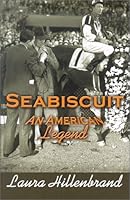
Forgotten Fame: Salt and Sauce meet Seabiscuit and the Match King

'CoverCover via Amazon

It amazed me when I first started researching the two music hall/circus elephants Salt and Sauce just how much I didn’t know about my own cultural history. Salt and Sauce were often quoted as being the most famous elephants of their time, and yet four decades after the death of Sauce at Butlin’s Holiday Camp, they had been all but forgotten. I guess it is appropriate, as their demise occurred when a new era arrived. Salt died in 1952 and Sauce in 1960. The ‘50s were a time of dramatic cultural change and just as Salt and Sauce moved on from Music Hall, a form of live entertainment that declined with the advent of the “talkies” on the cinema, circus began to slowly fall out of favour. The traditional circus wouldn’t disappear altogether – my parents’ own show toured from the late ‘70s until the early ‘80s – but by the end of the 1960s two of the three biggest UK circuses, Billy Smart’s and Bertram Mills, would both have ceased touring.

It was extraordinary. They were featured in books, radio broadcasts and cultural folklore. The celebrity artist and circus fan, Dame Laura Knight featured them in an etching. They had appeared on some of the most famous stages and circuses in British history alongside its most famous contemporaries, but when Sauce died the smallest of obituaries marked her passing in the weekly newspaper for showmen, the World’s Fair. They were seemingly locked in their time. Very little has been written about them since their death and most my research came from the era they lived in.

Forgotten fame is an interesting phenomenon. There are other examples of figures that were even more famous than Salt and Sauce, but little was written about them in retrospect. Another animal celebrity contemporary of Salt and Sauce that gallops to mind is the rags to riches racehorse “Seabiscuit”. Seabiscuit, of course, has since had his fame resurrected in the form of a book written by Laura Hillenbrand, “Seabiscuit: An American Legend” in 2001, which was made into a major feature film starring Tobey Maguire in 2003. At the time of the stallion’s success he captured the depression era’s imagination as a real Cinderella story in much the same way that James J. Braddock did around the same time. Seabiscuit had inauspicious beginnings on a farm in Kentucky, where his undesirable size and appearance did not originally bode well. However, after he changed hands from the legendary trainer, “Sunny Jim” Fitzsimons to trainer “Silent Tom” Smith, employed by the thoroughbred’s new owner Charles S. Howard, the automobile entrepreneur, his potential began to be realized.

Seabiscuit became a massive celebrity throughout the 1930s and a symbol of hope in the depreciation era as he won race after race against serious competition under odds that included some apparent foul play. 1938 saw him win “Horse of Year” and set the country alight with the drama of the racetrack. What made Seabiscuit exciting was not only the back-story of a “no-hoper”,* but also his style of racing. He would pace out the race and then make a sudden burst towards the end. This is something that would make his story the stuff of celluloid joy especially when he made his return to racing after an injury that many believed would signal the end of his career. He not only returned but won the Santa Anita Handicap race in 1940 for the $121,000 prize in front of 78,000 paying spectators. That year noted track writer, K. Beckwith wrote “Seabiscuit: The Saga of a Great Champion” and “The Story of Seabiscuit” was the inevitable yet highly fictionalized feature film about the horse’s racing career released in 1949 and starring former child star prodigy Shirley Temple. However, the legend would fade and Seabiscuit’s next notable appearance would be in an illustrated children’s book “Come on Seabiscuit” written by Ralph Moody in 1963. This would serve as the inspiration for Hillenbrand’s book written almost four decades later when Seabiscuit had almost faded into obscurity.

Ivar Kreuger is a different type of historical animal altogether. The only human of my trinity of forgotten famers, he’s a character that would not be popularly thought of as “noble” or “heroic”. This is especially true at the time of writing. I am living in a post-Enron era when we are in the midst of a global recession. The old capitalist model is being seriously challenged and so are questions regarding individualism. Kreuger, at the height of his fame, was the embodiment of the capitalist entrepreneur. He inspired the great libertarian philosopher and writer, Ayn Rand, to create several characters after his model. Gail Wynard of her breakthrough novel “The Fountainhead” is very much an Ivar Kreuger personality and the circumstances surrounding his death clearly influenced her play “Night of January 16th”. Rand saw in Kreuger a dynamic individualistic force that seemed unstoppable in his ambitions, but yet was far from perfect. Rand would perhaps see this imperfection simply as weakness – he committed suicide in 1932 when it came out that his financial empire was unstable and later would be revealed to be involved in mass fraud. Many others would see his weakness as unquenchable greed and after his death he would sometimes be given the title “The World’s Greatest Swindler”.

Ivar Kreuger’s most famous title was “The Match King” and this was no understatement. He changed the whole the face of the safety match industry, starting in his home country of Sweden and then expanding outside until he controlled the vast majority of match production in the world. Before he tried his hand at the family match producing business he was already an ambitious innovator. He had tried his hand at running several businesses, including a restaurant in South Africa, and was a qualified and trained engineer who introduced new building construction methods to Sweden. It was while he was a building contractor that he formed the company that would later be known as “Swedish Match”. He would grew his business interests in huge monopolies and generate tremendous trust that he was able to huge raise loans from various governments. By 1929 and through the acquisition and investment of over 200 companies, Ivar Kreuger was considered to be worth the equivalent of about $100bn by 2000 standards, according to the Wikipedia article.

Kreuger’s life story is a far more fascinating, complicated and involved biography than the mashed together paragraphs I have written for the purposes of this article. He was massively famous at the time purely based on the immense power he wielded and his innovation on virtually areas connected to business including sourcing materials, manufacture and production, financing, distribution, marketing and branching out. In many ways he was a Randian hero and a champion of the individualist cause. However, after his death his fame would make a giant descent into infamy. Many might argue that he was perhaps he was the moral lesson that Enron proved the industrial world hadn’t yet learned. As Seabiscuit was bringing hope and joy to those who lived in the Great Depression Iver Kreuger became a symbol for all that had been wrong about the extravagance and selfish greed of the era that had preceded it. And yet by the time the Second World War was over his memory would also fade in the public interest.

A book, “Kreuger”, was written by Paul Bjerre in the Match King’s native country of Sweden upon the year of his death. With the exception of a book written by Allen Churchill called “The Incredible Ivar Kreuger” in 1957 there was little written about this individual until 1995’s Swedish book “Ivar Kreugar” written by Lars-Erik Thunholm. This was then translated into English and republished in 2002 at “Ivar Kreuger: The Match King”. It was Professor Frank Partnoy who would bring up the subject of the lessons history could teach us and what got roused my attention on BBC Radio 4’s the “Today” programme on 23 February 2009. He also likened Kreuger’s temporary fame to be like Seabiscuit’s. In both instances it would take a good many decades before anyone took any serious interest in writing again about these figures that definitely warrant a position in western history.

And so I arrive back at my minor celebrities who also had their history truncated. Why do figures that excite so much attention at the time, suddenly fade into historical obscurity? Let us not confuse them with the “one-hit wonders”. All three examples were not famous for a short period - they were famous for most of their lives. One theory I would like to offer is that the dramatic change of the times made their story suddenly inappropriate. Salt and Sauce were not TV celebrities, in fact despite being one of the numerous pachyderms featured in “Elephant Boy” I have yet to see any film footage of them. When Sauce died the era of the TV had arrived and traditional travelling circus had already peaked. Seabiscuit was a symbol of hope for those of the Lost Generation and Greatest Generation that lived through extreme hardship through and between two world wars and economic disaster. His story had little relevance to the children born into prosperity and optimism of the ‘50s and ‘60s. In fact, horseracing did not have the mainstream appeal it clearly had during the Seabiscuit era. As for Iver Kreuger, the last thing anyone wanted to hear in the time of rebuilding and re-invention was a story about a hugely successful man who seemingly destroyed everything.

As historians, however, it is not our business to be trendy. My dear online friend and historian Dr. Heather Vallance has often discussed the folly of how many historians try to read into past events with the eyes of today. Although our technologies of today are great for doing this and we can perhaps collate more data that can help unravel mysteries, we need to understand why people behaved a certain way by understanding how they viewed things. Salt and Sauce were two amazing animals that regularly lumbered into the lives of communities with far less connection with the rest of the world than we can imagine today. They were seen on the roads, through the countryside and then onto a public field to impress the spectators with their incredible abilities and sheer size. Seabiscuit defied odds and showed the hard beaten victims of the Great Depression that seemingly anyone could make it if they had enough belief and spirit. Iver Kreuger revolutionised his industry with the spirit of innovation and then his fall showed them the people of his time extreme folly of greed. As we learn more and progress forward we must always be mindful of what has gone before. We don’t need to just learn from our previous mistakes or even draw from the wisdom of old. Rather we should look with the eye of objectivity and try to see with the eyes of that past.

*Historical sceptic check, it would appear according to the Wikipedia account that as amazing and full of drama Seabiscuit’s story was, his early career with Fitzsimons was not as bad as Hillenbrand and the subsequent feature film would have us believe. The price Fitzsimons sold the horse to Charles S. Howard was $8,000 (equivalent of $100,000 in today’s monetary terms).
Reblog this post [with Zemanta]

Tuesday, 3 March 2009

Clubb on Clubbed: A Reflection

When I was 18 I wrote to a new martial arts author called Geoff Thompson. Previously Geoff had annoyed me with the articles he was producing for the martial arts magazine I bought. I grew up in showbusiness right in the middle of old family circus culture and then via a business shift by my parents into film work. Therefore, movie stars, pop stars and other mainstream celebrities never really phased me much. They were accessible to a certain degree. However, living out in the sticks meant there weren't many martial arts clubs or at least there weren't many good ones, certainly not those taught by my heroes in the magazine I had religiously collected since I was 13. Now this new character on the block, Geoff Thompson, seemed to be really upsetting the proverbial apple cart by debunking popular ideas relating to how martial arts worked in real life. He was a doorman who had written about his experiences working the doors in 1980s Coventry in a book called "Watch My Back" and his conclusions were a very bitter pill for many in the martial arts world to swallow.

Then I had another reality check and in a short episode discovered that the stuff I thought I loved about martial arts didn't work for me and what I'd learnt from my circus background did! Geoff was right, but I felt a little shellshocked at the time and needed some support. So I wrote to the man seeking new knowledge. He replied to me with a handwritten and deeply considered letter. The correspondence continued and I became converted to the Geoff Thompson revolution! His work made the same impact on me that Bruce Lee did to the generation before me.

11 years later and I met Geoff for the first time as a seminar and would go on to train under his coaches, host seminars for them and eventually get an instructorship under Geoff in his self-defence system. We became friends and I have just recently written the forward to his latest book. The following link is a reflection on his first feature film, released this year, "Clubbed". http://www.clubbchimera.com/?p=543

Monday, 2 March 2009

Pseudoscepticism and Pseudo-History

When I was researching "The Legend of Salt and Sauce" a key issue I wanted to address was pseudo-history. There was a huge amount of Chinese whispers, urban legends and exagerrated and mixed up accounts to cut through to get to the truth relating to these two famous elephants. Pseudo-history, like the better recognized pseudoscience, is an unhistorical way to look at history. I have covered conspiracy theories in two of my previous posts on here. First in my interview with Dr. Heather Vallance and later in my short report on the psychology of conspiracists. They are perhaps the most easily recognizable and prolific form of pseudo-history. However, there is also unintentional faction and pulp non-fiction. Both of these were covered in my article "Myths, Faction and Pulp Non-Fiction". All of this type of think goes off on a confirmation bias rather than following the sage advice uttered by A.C. Doyle's fictional creation, Sherlock Holmes, in "The Adventure of the Reigate Squires": "Now, I make a point of never having any prejudices, and of following docilely wherever fact may lead me".

Recently the news has featured a member of the Catholic clergy who was criticized for his views on Holocaust Denial. Bishop Richard Williamson, who according to the Times news paper is a member of an "ultraconservative sect" of the Catholic Church, had his excommunication lifted in January this year, but immediately ran in to problems due the views he expressed on a Swedish TV show. He issued a public apology on 26 February, but few people were happy with its tone. Williamson apologized for upsetting anyone, but he didn't indicate he had changed his views. There is now more talk about him being prosecuted in Germany where it is apparently an offence to deny the holocaust: http://www.irishtimes.com/newspaper/world/2009/0228/1224241990165.html

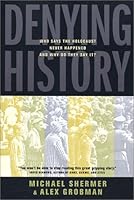
Holocaust Denial is, of course, another example of pseudo-history. There is also a conspiracy theory believed by many "Holocaust Revisionists". Understandably it is a very offensive "theory" to those who lost their relatives to the holocaust. It is also hard to see any other link to holocaust denial and especially those who believe in the "Jewish Consipiracy" than anti-semetism. It is for these reasons that many see Holocaust Denial as a hate crime. Unfortunately I fear, taking the view that you should be arrested for propagating bad history will only help strengthen the con-theos rather ridiculous case. For more on holocaust denial I would

'CoverCover via Amazon


recommend you read Michael Shermer's chapter on the subject in his "Why People Believe Weird Things" book or his collaborative work "Denying History", which focuses on the whole argument. Here are some worthy reviews of the latter work http://www.holocaust-trc.org/deny_history.htm As a side point and in the interests of keeping matter objectiv, there is also an interesting critique of Shermer's argument that doesn't support holocaust denial in anyway, but nevertheless pulls the author up on supposed logical fallacies http://www.geniebusters.org/915/04g_jumping.htmlThis gives an example of what makes history and science the best known methods for establishing fact: they are always up for review and objective criticism, and good historians and scientist welcome such challenges in the interests of further knowledge and understanding.

Holocaust denial is also an example of pseudoscepticism (pseudoskepticism). This is a term coined by Marcello Truzzi.

Marcello TruzziImage via Wikipedia

Truzzi succinctly put what he meant by pseudoscepticism in the following paragraph taken from a 1987 piece he wrote called "On Pseudo-Skepticism" in the "Zetetic Scholar" journal:

"In science, the burden of proof falls upon the claimant; and the more extraordinary a claim, the heavier is the burden of proof demanded. The true skeptic takes an agnostic position, one that says the claim is not proved rather than disproved. He asserts that the claimant has not borne the burden of proof and that science must continue to build its cognitive map of reality without incorporating the extraordinary claim as a new 'fact.' Since the true skeptic does not assert a claim, he has no burden to prove anything. He just goes on using the established theories of 'conventional science' as usual. But if a critic asserts that there is evidence for disproof, that he has a negative hypothesis --saying, for instance, that a seeming psi result was actually due to an artifact--he is making a claim and therefore also has to bear a burden of proof".

Very often con-theos are pseudosceptics by design. They start with a preconceived conclusion and then progress with a confirmation bias. Such an approach means that they are prone to nitpick for details they feel contradict the established view and support their own. Often in the recording martial arts and circus history I have noticed that too much has been provided by anecdotal evidence and, worse still, qualified by the appeal to authority logical fallacy argument. This is why I don't like to see any historical figure to be presented in a saintly or devilish light. I want "warts 'n all" accounts so that I can humanize the figure and get closer to the truth.

A pseudosceptic can also be a cynic. They can take the position of doubt

:de:en:Image:RANDI.Image via Wikipedia

without even hearing the case, which is not good history or science. The position of the good sceptic is to say "that sounds like a really interesting idea. Please prove it". The good sceptic/scientist/historian has to also ask himself as well as the person he is in conflict with: "Is there anything that woudl make you change your stance?" It's an argument put forward by the famous sceptic and magician James Randi. It's a wonderful starting point. If you or your debater says there is nothing that could be provided that would change their point of view then the argument is already over.
Reblog this post [with Zemanta]


Thursday, 26 February 2009

Damoo Dhotre Celebrations in India


Following up from a post I made on my father's behalf regarding the career of Damoo Dhotre, we were recently sent photographs of a special event held in the great Damoo's native land of India to celebrate the 36th anniversay of his death 23 January 1973. The event was organized by his great grandson, Anand Dhotre who very kindly sent me some photographs of the event and gave me permission to reproduce them on my blog.

Reblog this post [with Zemanta]